

Introduction Search Engine Optimization (SEO) helps improve a website’s visibility in organic search results. It allows businesses, bloggers, and website owners to reach people who are searching for relevant information, products, or services online. When someone searches on Google, they usually want an answer, a solution, or a service. A well-structured website with useful content can help search engines understand its pages and help visitors find the information they need. You do not need advanced technical knowledge to begin learning SEO. By understanding keyword research, content optimization, website structure, and performance tracking, you can gradually develop the skills needed to improve a website’s search presence. In this guide, you will learn how search engines work, the main types of optimization, useful tools, and practical ways to measure results. 1. What Is Search Engine Optimization? Search Engine Optimization is the process of improving a website’s content, structure, and technical accessibility so search engines can understand its pages and potentially show them for relevant searches. For example, someone searching for “freelance digital marketer in India” may discover a website that clearly explains its services and provides helpful information. Optimization does not guarantee a particular ranking. Google uses many signals to determine which pages appear in search results, and rankings can change over time. Why Is SEO Important? A well-optimized website can help you: Organic search does not require payment for every click, unlike paid advertising. However, creating and maintaining quality content still takes time and effort. 2. How Do Search Engines Work? Understanding how search engines discover and display web pages is an important part of learning SEO fundamentals. The process involves three main stages: crawling, indexing, and serving search results. Crawling Crawling is how search engines discover web pages. Automated programs called crawlers follow links and use other methods to find content. For a new website, internal links and a clear site structure can help search engines discover important pages. Indexing After discovering a page, Google analyzes its content, images, titles, and other information. It may then store the page in its index. Not every discovered page is guaranteed to be indexed. Duplicate content, technical problems, and other factors may affect whether a page is included. Serving Search Results When someone enters a search query, Google attempts to display pages that are relevant and useful for that person. Publishing a page does not guarantee immediate visibility. You can use Google Search Console to monitor indexing and search performance. 3. What Are the Main Types of SEO? Website optimization is commonly divided into three areas: on-page SEO, off-page SEO, and technical SEO. 3.1 On-Page SEO On-page SEO focuses on the elements within your website, including content, headings, titles, images, and internal links. Important practices include: For example, an article about keyword research should explain what it means, how to do it, which tools can help, and how to select relevant phrases. 3.2 Off-Page SEO Off-page SEO includes activities outside your website that can help establish its reputation and authority. Examples include: Backlinks are links from other websites to yours. Relevant, editorially earned links may help search engines understand how your content relates to other resources. Avoid buying links or using manipulative link schemes. 3.3 Technical SEO Technical SEO focuses on making your website accessible and understandable to search engines. Key areas include: Even useful content can struggle to appear in search results if important pages cannot be accessed or indexed correctly. 4. Keyword Research: Finding the Right Search Terms Keyword research is the process of discovering the words and phrases people use when searching online. It helps you understand your audience and plan content around their needs. For example, someone learning digital marketing might search for: These searches reflect different questions and levels of knowledge. How to Conduct Keyword Research Step 1: Choose a topic. Select a subject related to your website, such as digital marketing, social media, or search optimization. Step 2: Brainstorm search phrases. Think about what your audience might type into Google. Specific questions can reveal useful content ideas. Step 3: Check keyword data. Tools such as Google Keyword Planner provide keyword ideas and estimated search-volume data. These estimates vary by location, time, and other factors. Step 4: Understand search intent. Search intent is the reason behind a query. Someone searching “what is SEO” likely wants an explanation, while someone searching “SEO services in India” may be comparing service providers. Step 5: Select a primary keyword. Choose one main phrase that closely matches your page’s purpose. Include related terms only when they add useful context. Step 6: Create helpful content. Use your research to answer the searcher’s question thoroughly instead of repeating the same phrase throughout the article. 5. On-Page Optimization: Improving Your Content On-page optimization helps readers and search engines understand what each page covers. Write a Descriptive SEO Title Your SEO title should accurately describe the page and give readers a clear reason to click. Example: SEO for Beginners: The Complete Guide to Search Engine Optimization Keep titles clear and relevant. Google may generate a different title link in search results when it considers another version more appropriate. Create a Useful Meta Description A meta description summarizes the page and may appear beneath its title in search results. Example: Learn the fundamentals of search optimization, including keyword research, on-page techniques, technical improvements, link building, and performance tracking. Google may select a different snippet from the page, so your description is not guaranteed to appear exactly as written. Use Headings Correctly Headings help readers scan content and understand its structure. Organize headings logically. You do not need to place your primary keyword in every heading. Optimize Images Relevant images can make an article more engaging, but they should also be accessible and appropriately sized. Good practices include: For example, an image showing a search performance dashboard could use the alt text “SEO dashboard displaying search traffic and keyword metrics.” Alt text should describe the image rather than exist solely to repeat a keyword. Add Internal and External

How to Create a Digital Marketing Strategy for Beginners
A digital marketing strategy for beginners is a step-by-step plan to help a business reach the right audience, promote its products or services online, and achieve marketing goals. By choosing the right channels, creating useful content, and tracking results, beginners can build an effective digital marketing strategy without feeling overwhelmed. Introduction Digital marketing helps businesses reach their target audience, build brand awareness, and promote their products or services online. However, posting on social media or running advertisements without a clear plan may not deliver the expected results. A digital marketing strategy provides direction by helping businesses set goals, understand their audience, choose suitable marketing channels, and measure performance. If you’re a beginner, you don’t need a complicated plan to get started. In this guide, you’ll learn seven practical steps to create a digital marketing strategy and avoid common mistakes. 1. Set Clear Marketing Goals A successful digital marketing strategy for beginners starts with clear, measurable goals that help a business track its progress. The first step in creating a digital marketing strategy is deciding what you want to achieve. Clear goals help you select the right marketing activities and measure your progress. Common digital marketing goals include: Make your goals specific and measurable. For example, instead of saying, “I want more website visitors,” aim to increase organic website traffic by 15% over three months. Your goals should be realistic and connected to your business objectives. 2. Identify Your Target Audience Understanding your ideal customers is an important part of creating a digital marketing strategy for beginners because it helps you choose relevant messages and channels. Your target audience consists of the people most likely to be interested in your products or services. Understanding their needs helps you create relevant content and choose suitable marketing channels. Consider these questions: You can understand your audience through customer feedback, keyword research, social media insights, and website analytics. For example, a business offering professional services might focus on people searching online for solutions to specific business problems. Understanding these needs helps the business create relevant blog posts, landing pages, and social media content. 3. Research Your Competitors Understanding your ideal customers is an important part of creating a digital marketing strategy for beginners because it helps you choose relevant messages and channels. Competitor research helps you understand how other businesses attract and communicate with their audiences online. Review their websites, blog topics, social media content, search visibility, and advertising messages. Look for: The goal isn’t to copy competitors. Instead, identify ways to make your content more helpful, explain topics clearly, and communicate your own value. 4. How to Create a Digital Marketing Strategy for Beginners When building a digital marketing strategy for beginners, choose channels that match your target audience, budget, and business objectives. Search Engine Optimization (SEO) SEO helps improve a website’s visibility in unpaid search results. It involves keyword research, useful content, relevant headings, internal linking, and website improvements. SEO can help businesses attract people searching for information, products, or services. For more information, read Google’s SEO Starter Guide. Social Media Marketing Social media marketing helps businesses connect with audiences, share content, build brand awareness, and encourage engagement. Platforms such as Instagram, Facebook, and LinkedIn can serve different audiences and business objectives. Choose platforms based on where your target audience spends time. Google Ads and Paid Advertising Paid advertising allows businesses to promote products or services to selected audiences. Google Ads can help businesses reach people searching for relevant solutions. Paid campaigns require budgeting, testing, and regular performance monitoring. Results depend on factors such as targeting, competition, advertising quality, and landing page experience. Content Marketing Content marketing involves creating useful material such as blog posts, guides, videos, and infographics. Helpful content can answer audience questions, build trust, and support SEO efforts. Email Marketing Email marketing helps businesses communicate with subscribers through newsletters, updates, educational content, and relevant offers. It works best when messages provide value and are sent to people who have agreed to receive them. Tip: Start with one or two suitable channels instead of trying to manage every platform at once. 5. Create a Content Plan A content plan helps you organize what to publish, where to publish it, and when to share it. digital marketing strategy Your plan might include: Create a simple content calendar containing the topic, target keyword, content format, publication date, and intended audience. For example, a digital marketing website could publish a comprehensive guide about digital marketing, followed by focused articles about digital marketing strategies, SEO, and social media marketing. Connect related articles through relevant internal links so readers can explore topics in more detail. 6. Set a Realistic Budget Your digital marketing budget depends on your business goals, available resources, and chosen channels. Possible expenses include: Some activities, such as writing helpful blog posts and improving basic on-page SEO, can begin with limited spending. Paid advertising requires a separate budget, and results are not guaranteed. Start with an affordable plan, track your expenses, and evaluate whether your activities contribute to your goals. 7. Track Results and Optimize Your Strategy A digital marketing strategy should be reviewed regularly. Measuring performance helps you understand what attracts visitors, encourages engagement, and leads to meaningful actions. Reviewing website traffic, engagement, and conversions helps beginners improve their digital marketing strategy over time. Important metrics include: You can use Google Analytics to understand website activity and Google Search Console to monitor search performance. Review the results against your original goals. If a blog post receives search impressions but few clicks, review its title and description. If a campaign attracts visitors but generates few enquiries, examine whether the landing page meets their expectations. Use data to identify opportunities and improve your strategy over time. Common Digital Marketing Mistakes to Avoid Even a well-planned strategy can be weakened by avoidable mistakes. Here are some common problems to watch out for. 1. Setting Vague Goals A goal such as “get more customers” doesn’t explain how success will be measured. Set specific objectives
Complete Guide to Digital Marketing: Everything Beginners Need to Know
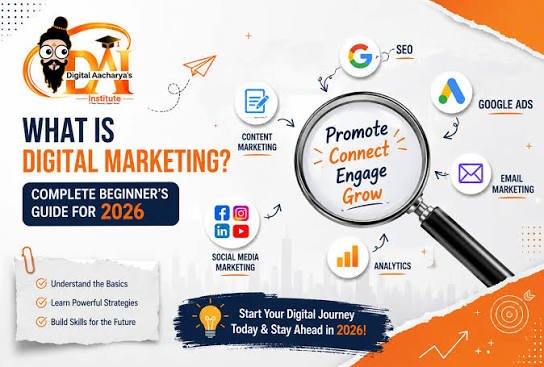
Introduction Digital marketing has become an important part of how businesses connect with customers, promote their products, and grow online. From search engines and social media to email campaigns and online advertising, digital marketing helps brands reach the right audience through digital channels. Whether you are a student, a beginner, or a business owner, understanding digital marketing can help you learn how businesses attract customers, generate leads, and build strong relationships online. In this guide, we will explore what digital marketing is, its main types, its benefits, and how beginners can get started. What Is Digital Marketing? Digital marketing is the promotion of products, services, or brands through online channels and digital technologies. It allows businesses to reach their target audience through search engines, websites, social media, email, and paid advertisements. Unlike traditional marketing methods such as newspapers, billboards, and television, digital marketing offers tools to measure campaign performance. Businesses can track website visits, clicks, engagement, leads, and conversions to understand what is working. For example, a clothing business might use Instagram to showcase its products, SEO to attract people searching on Google, and Google Ads to reach potential customers who are ready to buy. If you’d like to learn more about my interests and journey in digital marketing, visit my About Me page. About me https://mizbah.in/about-me/ Why Is Digital Marketing Important? Digital marketing helps businesses connect with potential customers where they already spend time: online. Its main benefits include: The results depend on the marketing strategy, audience, budget, competition, and quality of execution. What Are the Main Types of Digital Marketing? 1. Search Engine Optimization (SEO) https://developers.google.com/search/docs/fundamentals/seo-starter-guide Search Engine Optimization, or SEO, is the process of improving a website so that its pages can appear more prominently in unpaid search engine results SEO activities include keyword research, creating helpful content, optimizing page titles and headings, improving website structure, and addressing technical issues that affect crawling and indexing. Example: A digital marketing website publishes an informative article about keyword research to attract people searching for that topic on Google. 2. Social Media Marketing Social media marketing involves using platforms such as Instagram, Facebook, and LinkedIn to build brand awareness, share content, engage audiences, and support business goals. It includes creating posts, publishing reels, planning content calendars, responding to comments, and analyzing engagement. Example: A bakery shares product photos and short videos on Instagram to attract local customers. 3. Search Engine Marketing and Google Ads Paid search advertising allows businesses to display advertisements to people searching for relevant products or services. Google Ads is a commonly used platform for creating these campaigns. Advertisers can select keywords, define audiences and locations, set budgets, and measure results such as clicks and conversions. Example: A training institute runs Google Ads for people searching for digital marketing courses in its city. 4. Content Marketing Content marketing focuses on creating and sharing useful, relevant content to attract and engage a target audience. Common formats include blog articles, guides, videos, infographics, and case studies. Effective content answers real questions and helps people make informed decisions. Example: A skincare brand publishes an educational article explaining how to build a basic skincare routine. 5. Email Marketing Email marketing helps businesses communicate with subscribers through newsletters, product updates, educational content, and promotional messages. Businesses can organize their audiences into groups and measure metrics such as clicks, conversions, and unsubscribes. Example: An online store emails subscribers about a new collection or products they may find useful. 6. Performance Marketing Performance marketing focuses on campaigns that can be measured against defined outcomes, such as leads, sales, registrations, or app installations. It may include paid search, paid social campaigns, affiliate marketing, and other measurable advertising activities. Example: A business runs an advertising campaign and measures how much it spends to generate each qualified lead. How Does Digital Marketing Work? A digital marketing strategy usually follows these steps: Digital marketing is an ongoing process. Testing, learning, and improving are essential parts of building a more effective strategy. Essential Digital Marketing Tools Several tools help marketers plan, execute, and measure their activities. The best tools depend on business goals and the marketing channels being used. Beginners can start by learning a few tools well rather than trying to master everything at once. How Can Beginners Start Learning Digital Marketing? If you are new to digital marketing, begin with the fundamentals and build your knowledge step by step. You do not need to master every channel immediately. Start with the areas that interest you, then gradually expand your knowledge. Conclusion Digital marketing combines strategy, creativity, technology, and data to help businesses connect with their audiences online. Understanding SEO, social media marketing, paid advertising, content marketing, email marketing, and performance marketing provides a strong foundation for exploring this field. For beginners, the most useful approach is to learn the fundamentals, practise with real or sample projects, and understand how to measure results. With consistent learning and practical experience, digital marketing concepts become easier to apply to business goals.